Bull Rampage: The Ultimate Encyclopedia
Discover the thrilling world of traditional Indian bull-chasing sport that has captivated generations
Table of Contents
Overview of Bull Rampage ?
Bull Rampage represents one of India's most ancient and thrilling traditional sports, deeply rooted in rural agricultural communities. This adrenaline-pumping activity involves participants demonstrating their courage and skill by attempting to tame or control a specially bred bull during its aggressive charging phase.
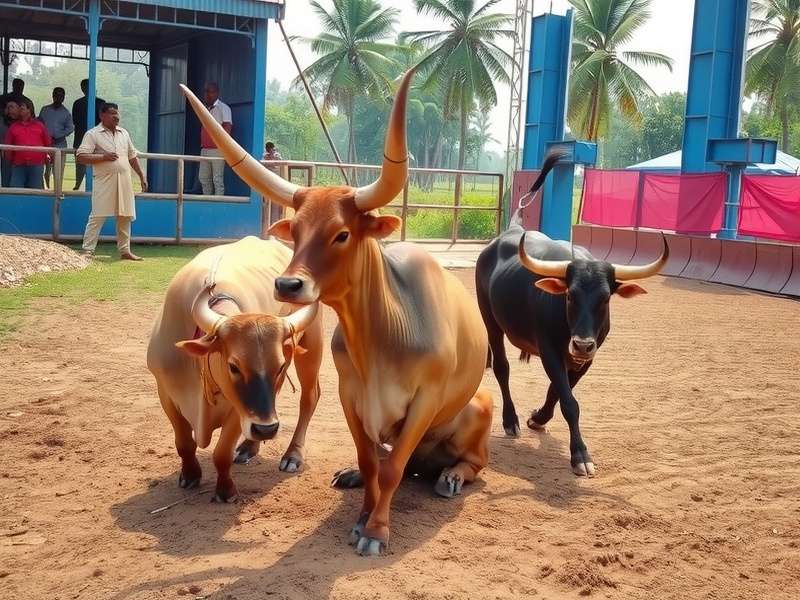
Traditional Bull Rampage event showcasing the raw energy and cultural significance
The sport, known regionally as Jallikattu, Manju Virattu, or Eruthazhuvuthal, showcases the unique bond between humans and bulls in Indian agrarian society. Unlike western bullfighting, the objective in Bull Rampage isn't to harm the animal but to showcase human bravery and the bull's strength and vitality.
Key Characteristics
Bull Rampage distinguishes itself through several unique features: the bulls are specially bred for the event, participants use no weapons, the focus is on temporary control rather than harm, and the events are deeply connected to harvest festivals and religious ceremonies.
Historical Origins & Evolution ?
The origins of Bull Rampage can be traced back over 2,500 years to the Tamil Sangam era in ancient South India. Archaeological evidence and classical Tamil literature contain numerous references to "Eruthazhuvuthal," which literally translates to "embracing the bull."
Historical Timeline
Sangam Period (300 BCE - 300 CE): First recorded evidence in Tamil literature describing bull-taming as a display of bravery.
Medieval Era: Integration with temple festivals and agricultural celebrations.
Colonial Period: British attempts to ban the practice met with strong resistance.
Post-Independence: Revival and standardization of rules and safety measures.
Ancient Tamil texts like Silappathikaram and Malaipadukadam provide detailed descriptions of bull-taming sports conducted during the harvest festival of Pongal. These texts celebrate the valor of young men who would attempt to cling to the hump of ferocious bulls released into open fields.
The practice evolved significantly during the Chola and Pandya dynasties, where victorious warriors were often celebrated through similar displays of courage with bulls. The modern iteration of Bull Rampage maintains many of these historical elements while incorporating contemporary safety standards.
Rules & Gameplay Mechanics ⚖️
The traditional Bull Rampage follows a structured set of rules designed to balance excitement with safety for both participants and animals. The fundamental objective remains consistent across regional variations: participants must attempt to hold onto the running bull for a specified distance or duration, or remove tokens tied to the bull's horns.
Standard Competition Rules
- Participant Eligibility: Only registered participants above 18 years are permitted
- Bull Specifications: Specially bred native breeds like Kangayam, Pulikulam, or Umblachery
- Venue Requirements: Designated arenas with proper barricades and emergency exits
- Time Limits: Typically 2-3 minutes per bull release
- Victory Conditions: Holding the hump for minimum 15 meters or retrieving tokens
- Safety Protocols: Mandatory medical teams and veterinary supervision
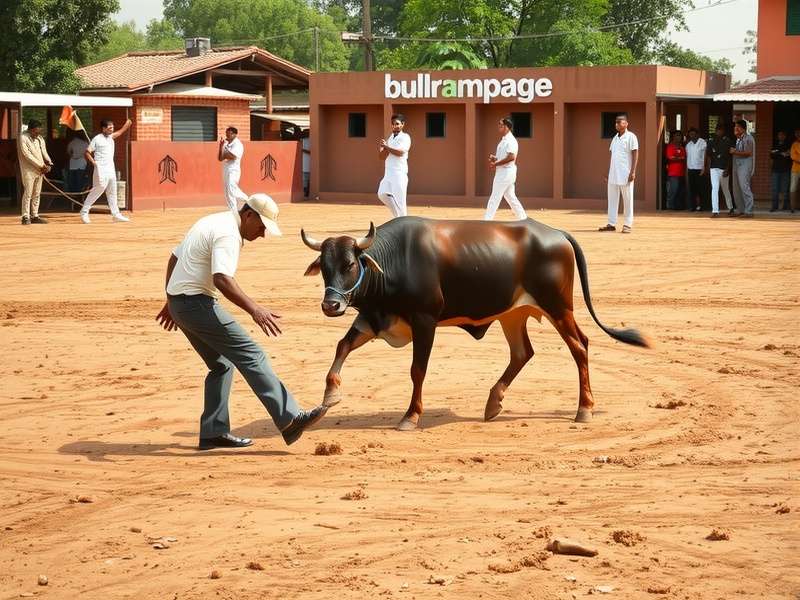
Properly structured arena ensuring participant and spectator safety
Modern regulations have introduced significant safety improvements, including mandatory registration of participants, veterinary certification of bull health, installation of protective barricades, and immediate medical response capabilities. These enhancements have helped address concerns while preserving the cultural essence of Bull Rampage.
Cultural & Social Significance ?
Bull Rampage transcends mere sport to embody deep cultural, social, and agricultural significance in Indian rural communities. The event symbolizes the harmonious relationship between humans, animals, and nature that forms the foundation of agrarian life.
Social Functions
The practice serves multiple social purposes: preserving native cattle breeds, reinforcing community bonds, celebrating agricultural prosperity, honoring traditional values of courage and skill, and providing a platform for youth to demonstrate valor and gain social recognition.
In many villages, success in Bull Rampage competitions enhances marriage prospects and social standing. The bulls that perform exceptionally are highly valued for breeding, thus preserving indigenous cattle genetics that might otherwise be lost to cross-breeding programs.
Religious Connections
The timing of Bull Rampage events typically coincides with major Hindu festivals, particularly Pongal in Tamil Nadu and Mattu Pongal specifically, which honors cattle for their role in agriculture. The sport is often conducted near temples as part of religious celebrations.
Agricultural Importance
Beyond entertainment, these events serve practical agricultural purposes by identifying the strongest bulls for breeding, thus maintaining the genetic vitality of native cattle breeds essential for sustainable farming in challenging climatic conditions.
Modern Adaptations & Controversies ?
The contemporary era has brought both challenges and evolution to Bull Rampage. While the core spirit remains unchanged, modern iterations have adapted to address legal, ethical, and safety concerns through structured regulations and oversight mechanisms.
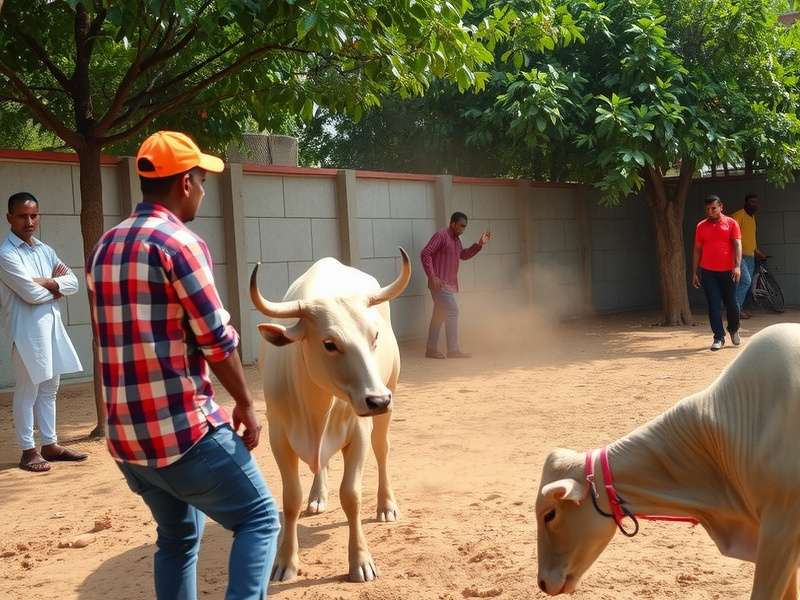
Contemporary events incorporate enhanced safety protocols for all involved
Legal Framework & Regulation
Following Supreme Court interventions and animal welfare concerns, modern Bull Rampage events operate under strict guidelines. The Prevention of Cruelty to Animals Act, along with state-specific regulations, governs conduct, mandating veterinary supervision, participant training, and emergency response planning.
Regulatory Milestones
2014: Supreme Court ban on Jallikattu citing animal cruelty concerns
2017: Massive protests lead to ordinance allowing regulated events
2018: Tamil Nadu Jallikattu Regulation Act establishes comprehensive framework
2021: Supreme Court upholds state legislation, validating cultural significance
Despite controversies, proponents argue that properly regulated Bull Rampage promotes conservation of native cattle breeds, preserves cultural heritage, and provides economic benefits to rural communities through tourism and related activities.
Regional Variations Across India ?️
While Bull Rampage is most famously associated with Tamil Nadu, similar traditions exist across various Indian states, each with unique characteristics, rules, and cultural contexts that reflect regional diversity.
Tamil Nadu - Jallikattu
The most famous variant where participants attempt to hold onto the bull's hump for a specified distance. Multiple styles include Vadi Manju Virattu (release from enclosed space) and Veli Virattu (open field chasing).
Karnataka - Kambala
Buffalo racing tradition where pairs of buffaloes sprint through slushy paddy fields guided by farmers. While not identical to Bull Rampage, it shares similar agricultural roots and celebratory context.
Maharashtra - Bailgada Sharyat
Bullock cart racing tradition that showcases the speed and strength of specially bred bulls. Though mechanized transport has reduced its practical relevance, cultural events preserve this heritage.
Kerala - Maramadi
Bull races conducted in rain-fed paddy fields after harvest season. Participants ride pairs of bulls across muddy fields, demonstrating control and balance in challenging conditions.
Andhra Pradesh - Edukondalu
Bull decorating and procession traditions where beautifully adorned bulls are paraded through villages during festivals, sometimes accompanied by demonstrations of bull handling skills.
These regional variations of Bull Rampage collectively represent India's diverse cultural tapestry while sharing common themes of celebrating bovine strength, agricultural prosperity, and human courage.
Training & Preparation Techniques ?
Success in Bull Rampage requires extensive physical conditioning, technical skill development, and mental preparation. Both participants and bulls undergo specialized training regimens to ensure peak performance and safety during events.
Participant Training
Aspiring Bull Rampage competitors typically begin training in their teenage years, focusing on developing specific physical attributes and skills essential for the sport:
- Grip Strength: Specialized exercises to develop exceptional hand and forearm strength
- Core Stability: Intensive abdominal and back training to maintain position on moving bulls
- Reaction Time: Drills to enhance quick decision-making in high-pressure situations
- Endurance Training: Running, swimming, and sport-specific conditioning
- Technical Skills: Learning proper bull-approach techniques and safe falling methods
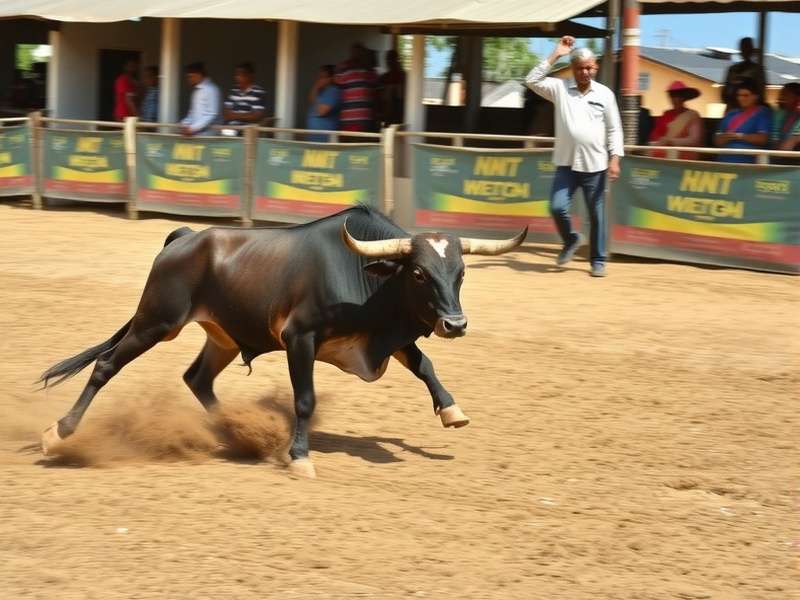
Traditional training methods passed down through generations
Bull Preparation
The bulls used in Bull Rampage receive specialized care and training from a young age. Selective breeding prioritizes agility, strength, and temperament. Training focuses on building stamina, familiarizing bulls with crowds and noise, and developing the explosive speed that makes the sport challenging. Proper nutrition, regular exercise, and veterinary care ensure the animals remain in peak condition.
Future of Bull Rampage ?
As Bull Rampage navigates the complexities of modernity, its future appears to be evolving toward greater regulation, commercialization, and global recognition while striving to preserve its cultural authenticity and traditional values.
Emerging Trends
- Standardization: Development of uniform rules and safety protocols across regions
- Commercialization: Growing sponsorship, media coverage, and tourism integration
- Technological Integration: Use of sensors and cameras for enhanced judging and safety
- Youth Engagement: Structured training programs to attract younger participants
- Global Awareness: Increasing international recognition as cultural heritage
Conservation Role
The future of Bull Rampage is increasingly linked to native cattle conservation efforts. By creating economic value for indigenous breeds through sporting events, communities have greater incentive to preserve genetic diversity that might otherwise be lost to commercial farming practices focused on high-yield crossbreeds.
UNESCO Recognition Efforts
Various organizations are campaigning for UNESCO Intangible Cultural Heritage status for Bull Rampage, which would provide international recognition, preservation support, and regulated framework for continuation of this ancient tradition while addressing welfare concerns through globally accepted standards.
The ongoing evolution of Bull Rampage demonstrates how traditional practices can adapt to contemporary values while preserving cultural essence. With proper regulation and community engagement, this ancient sport appears poised to continue thrilling audiences while maintaining its deep cultural significance for generations to come.
Cultural Legacy Continues
Bull Rampage represents more than just a sport—it embodies centuries of agricultural tradition, cultural identity, and the enduring bond between humans and animals in Indian society. As it evolves to meet modern standards, its core spirit of courage, skill, and celebration of rural life continues to inspire and captivate participants and spectators alike.