Taandav Champ: The Rhythmic Game of India ?
Table of Contents ?
Overview of Taandav Champ ?
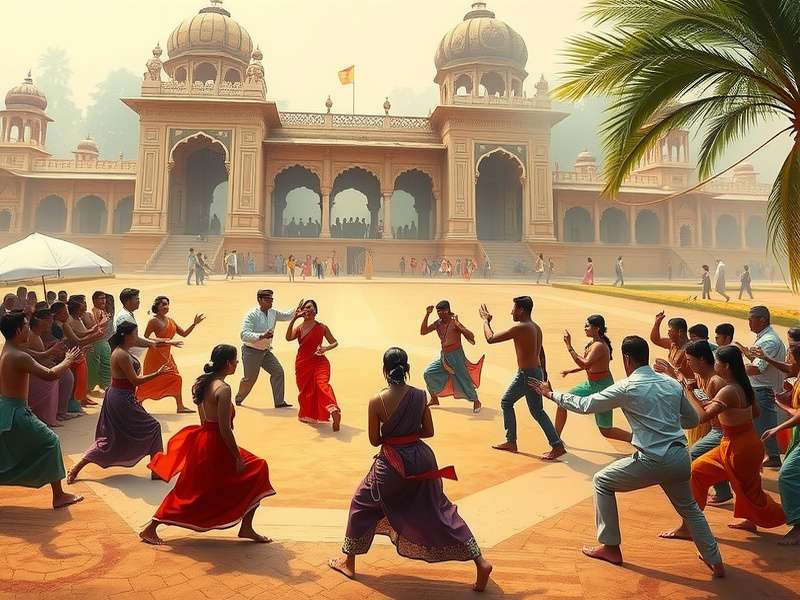
Taandav Champ represents one of India's most vibrant traditional games, blending physical agility with rhythmic precision. This unique sport has been practiced for centuries across various regions of the Indian subcontinent, particularly in rural communities where traditional games maintain cultural significance.
The name Taandav Champ derives from two distinct concepts: "Taandav" references the cosmic dance of Lord Shiva, representing powerful, rhythmic movement, while "Champ" signifies victory or championship. Together, they encapsulate the game's essence - achieving mastery through rhythmic motion.
Key Insight: Unlike Western sports focused primarily on competition, Taandav Champ emphasizes harmony between participants, making it both a physical activity and a meditative practice.
Participants of Taandav Champ engage in a series of choreographed movements synchronized to traditional Indian percussion instruments. The game requires exceptional timing, spatial awareness, and cultural understanding, making it a holistic activity that develops both body and mind.
Historical Origins and Evolution ?
The origins of Taandav Champ can be traced back to ancient temple rituals in Southern India, where rhythmic movements were performed as offerings to deities. Historical records suggest similar practices existed as early as the 7th century CE, though the standardized game format emerged during the Vijayanagara Empire period.
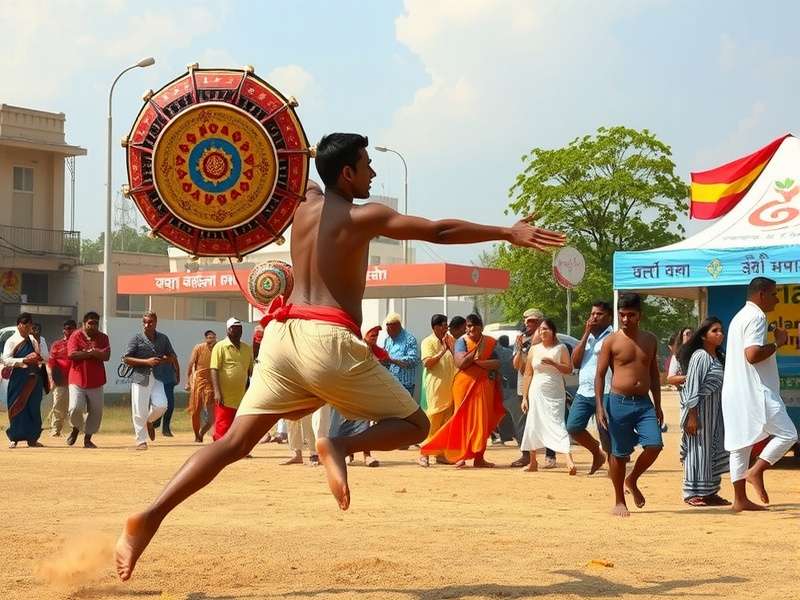
During the Mughal era, Taandav Champ experienced significant evolution, incorporating elements from Persian rhythmic traditions. This fusion created the distinctive hybrid form that characterizes the modern game, blending Hindu philosophical concepts with sophisticated movement patterns.
Cultural Note: Many traditional Indian festivals feature demonstration matches of Taandav Champ, particularly during harvest celebrations and religious ceremonies.
The British colonial period saw a decline in traditional games like Taandav Champ as Western sports gained prominence. However, post-independence cultural revival movements in the mid-20th century helped preserve and standardize the game, leading to its current status as a cherished cultural heritage activity.
Regional Variations
Across India's diverse cultural landscape, Taandav Champ has developed distinct regional characteristics. In Rajasthan, the game incorporates more vigorous footwork, while Kerala's version emphasizes graceful hand movements. The Bengali variation includes lyrical elements, and Tamil Nadu's approach focuses on geometric precision.
Gameplay Mechanics and Techniques ?
The core gameplay of Taandav Champ revolves around executing precise movements in response to rhythmic cues. Players must maintain both individual technique and group synchronization, creating a visually stunning performance that demonstrates collective harmony.
Hand Gestures (Mudras)
Intricate hand positions that convey specific meanings and must be executed with precision timing.
Footwork Patterns
Complex stepping sequences that create rhythmic patterns audible through ankle bells (ghungroos).
Group Formations
Evolving geometric patterns created by multiple players moving in coordinated sequences.
Mastering Taandav Champ requires years of dedicated practice. Beginners start with basic steps (pallavis) before progressing to more complex compositions (tillanas). Advanced players learn to improvise within traditional structures, demonstrating both technical proficiency and creative expression.
Pro Tip: Successful Taandav Champ players develop exceptional peripheral vision to maintain awareness of other participants while executing precise individual movements.
The game is typically accompanied by live music featuring traditional instruments like the mridangam (double-headed drum), tabla (pair of drums), and sometimes flute or veena. The musicians and players engage in a dynamic interaction, with rhythmic patterns evolving throughout the performance.
Official Rules and Scoring System ⚖️
The standardized rules for Taandav Champ were formalized in 1987 by the All India Traditional Games Federation. These regulations ensure fair competition while preserving the game's traditional essence and cultural integrity.
Basic Rules
Scoring Criteria
Judges evaluate performances based on five key criteria, each weighted equally in the final score:
- Technical Accuracy - Precision of movements and gestures
- Rhythmic Synchronization - Alignment with musical cues
- Group Coordination - Harmony among team members
- Artistic Expression - Emotional conveyance and storytelling
- Traditional Authenticity - Adherence to cultural roots
Championship Note: The National Taandav Champ Championship held annually in Chennai attracts teams from across India, with the winning team receiving the Golden Ghungroo trophy.
Cultural Significance and Modern Relevance ?
Taandav Champ represents more than mere entertainment; it embodies philosophical concepts central to Indian culture. The game illustrates the harmony between individual expression and collective responsibility, mirroring values promoted in traditional Indian society.
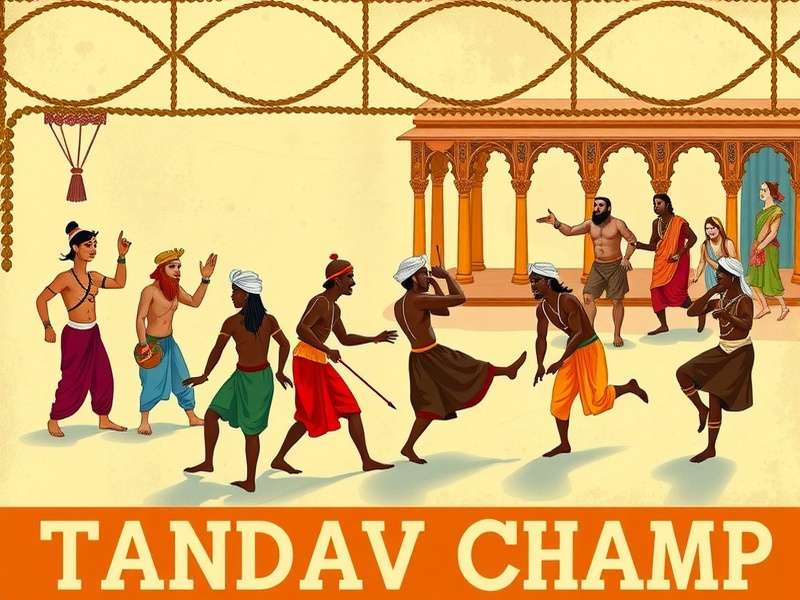
In educational contexts, Taandav Champ has been incorporated into some school curricula as a means of teaching cultural heritage, developing coordination, and fostering teamwork. Studies have shown that participants demonstrate improved cognitive flexibility and pattern recognition abilities.
Preservation Efforts
Various organizations work to preserve and promote Taandav Champ as an important cultural tradition. The Ministry of Culture supports training programs in rural areas, while urban cultural centers offer classes to interested youth. Digital archives document variations of the game from different regions.
Future Outlook: With growing interest in traditional wellness practices, Taandav Champ is experiencing renewed popularity as both a cultural activity and a mindful movement practice with demonstrated benefits for mental health.
International exposure has introduced Taandav Champ to global audiences through cultural exchange programs and performances at international festivals. While maintaining its traditional core, the game continues to evolve, with contemporary interpretations exploring fusion with other movement arts.
Modern Adaptations and Global Reach ✈️
In recent decades, Taandav Champ has undergone creative reinterpretations while maintaining its traditional essence. Contemporary versions might incorporate elements from other dance forms, experimental music, or digital visualizations that respond to players' movements.
The digital age has brought new opportunities for preserving and sharing Taandav Champ. Online tutorials, virtual reality experiences, and motion-capture documentation ensure that this traditional art form can be accessed by global audiences while providing valuable resources for practitioners.
Competitive Scene
While Taandav Champ remains primarily a cultural practice rather than a commercial sport, organized competitions at regional, national, and international levels provide platforms for excellence. The World Traditional Games Federation has recognized Taandav Champ as an official event in its quadrennial championships.
Global Presence: Taandav Champ demonstration teams have performed in over 30 countries, with practice communities established in diaspora Indian communities worldwide.
Looking forward, Taandav Champ faces both challenges and opportunities. Urbanization and changing lifestyles threaten traditional practices, while simultaneously, global interest in mindfulness practices and cultural diversity creates new avenues for engagement and appreciation.
The enduring appeal of Taandav Champ lies in its unique combination of physical discipline, artistic expression, and cultural meaning. As both a competitive activity and meditative practice, it continues to offer valuable experiences for participants and audiences alike, ensuring its place in India's living cultural heritage.